Research Highlights
Exciting work from out faculty featured below. Subscribe to our Youtube channel to watch more research highlights, including student work!
An Economic Analysis of Machine Learning Reducing Health Care Costs During Radiation Therapy
Machine learning to identify patients most likely to benefit preventative interventions are rarely tested in randomized controlled trials. SHIELD-RT, led by Dr. Julian Hong and colleagues, showed that ML accurately identified patients at highest risk for acute care during radiotherapy, with later economic analysis—published here in NEJM AI—demonstrating that the approach improved clinical outcomes and reduced medical costs.
Leveraging AI and knowledge graphs to predict Alzheimer’s disease onset and risk
Dr. Marina Sirota, Dr. Sergio Baranzini and colleagues have used machine learning to predict Alzheimer’s disease up to 7 years before symptoms appear. Finding that high cholesterol and, for women, osteoporosis, were both predictive of risk, the work demonstrates the promise of combining AI, knowledge graphs and clinical data to ID genetic markers and other determinants of risk.

Conformal Meta-learners for Predictive Inference of Individual Treatment Effects
Machine learning (ML) to predict treatment response often gives only a single estimate of average treatment effect, without quantifying uncertainty based on errors in the model or individual variation. Dr. Ahmed Alaa and colleagues here introduce a new method that can provide valid inference of treatment effects for individual patients, and a reliable uncertainty estimate, using any ML model.

Identifying Reasons for Contraceptive Switching from Real-World Data Using Large Language Models
Many factors related to medication switching are only captured in unstructured clinical notes and can be difficult to extract. Dr. Irene Chen and colleagues evaluated the abilities of GPT-4, with no previous training, to identify reasons women changed contraceptives, demonstrating that GPT-4 could accurately extract reasons for switching.
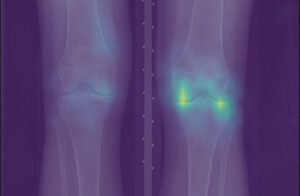
AI can Fight Racial Bias
Dr. Ziad Obermeyer discovers that by training an algorithm to listen to patients—not doctors—researchers can diagnose and fix racial biases built into medical knowledge.

Optimizing risk-based breast cancer screening policies with reinforcement learning
Dr. Adam Yala et al developed Tempo, a reinforcement-learning based framework for deriving personalized screening policies. Tempo policies were significantly more efficient than existing clinical guidelines across diverse test sets from four hospitals.